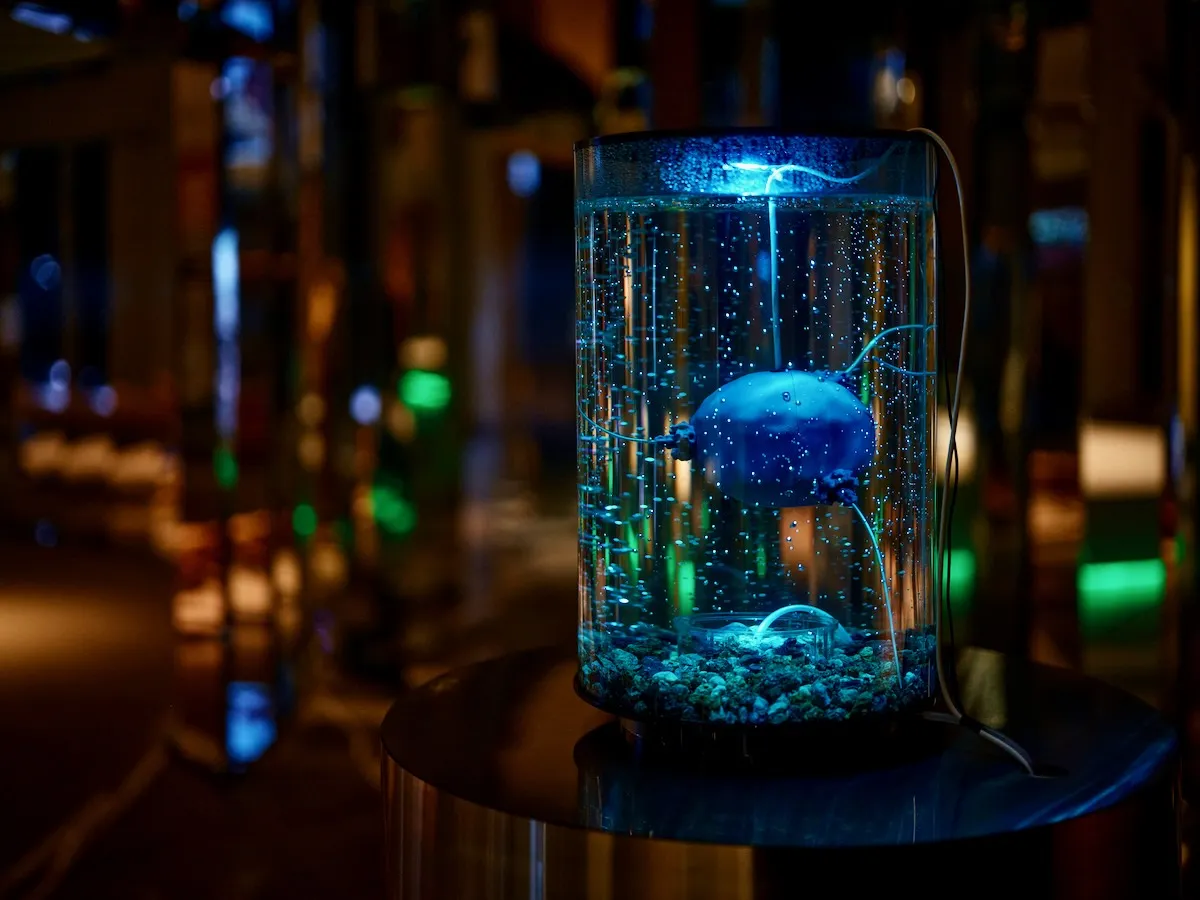
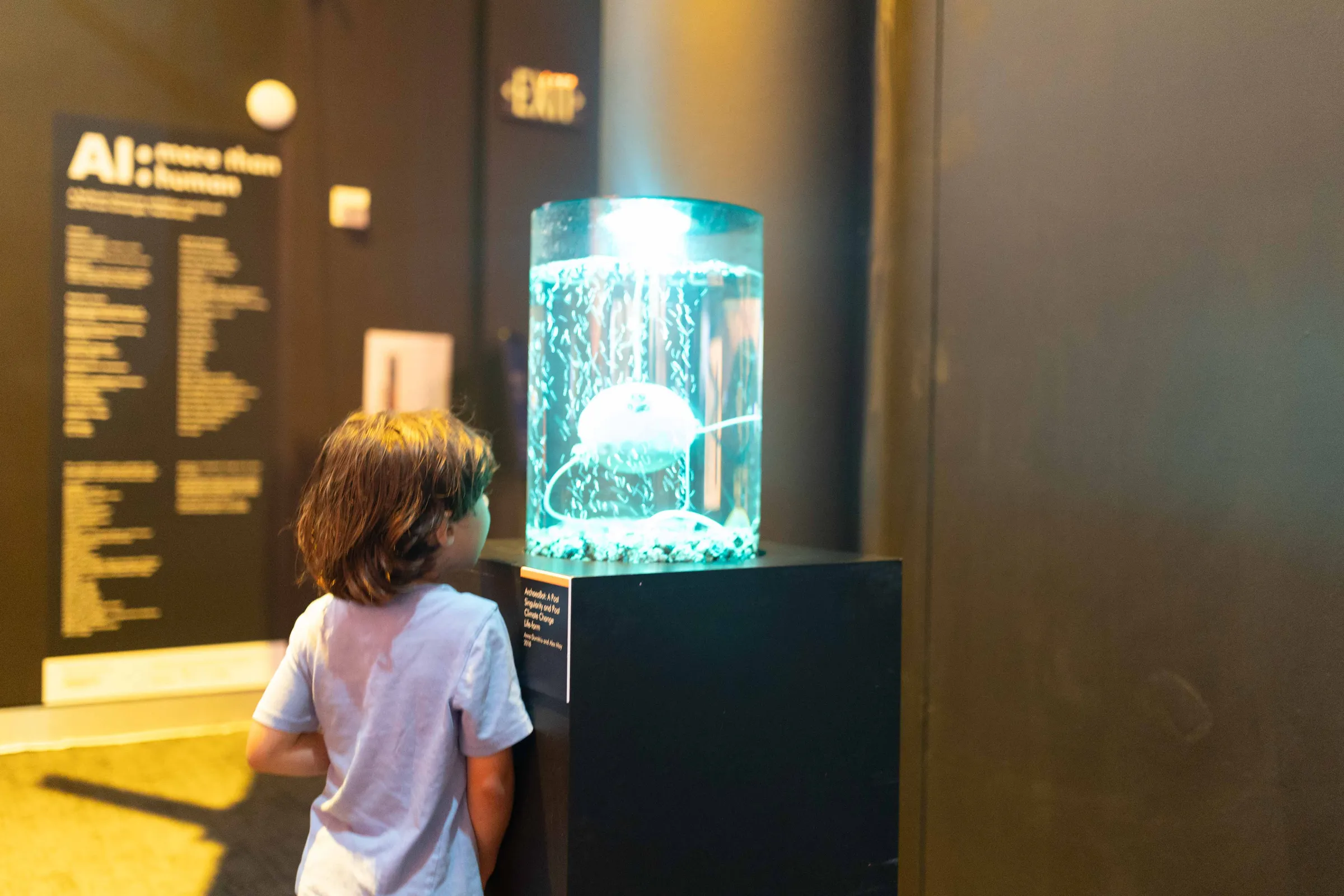
ArchaeaBot: A Post Climate Change, Post Singularity Life-form
An underwater robotic installation imagines an archaea-like survivor for worlds shaped by climate collapse and post-human adaptation.
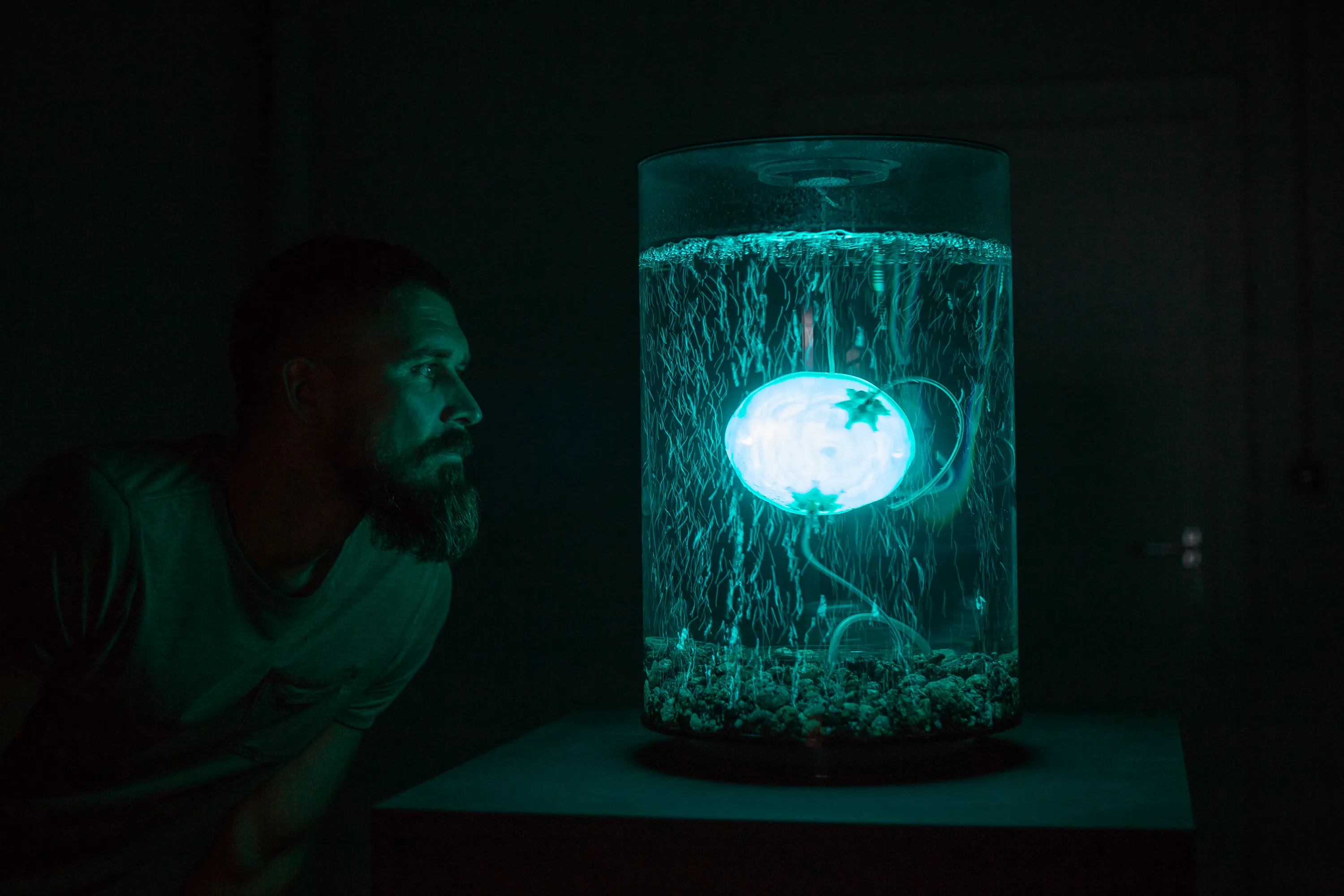
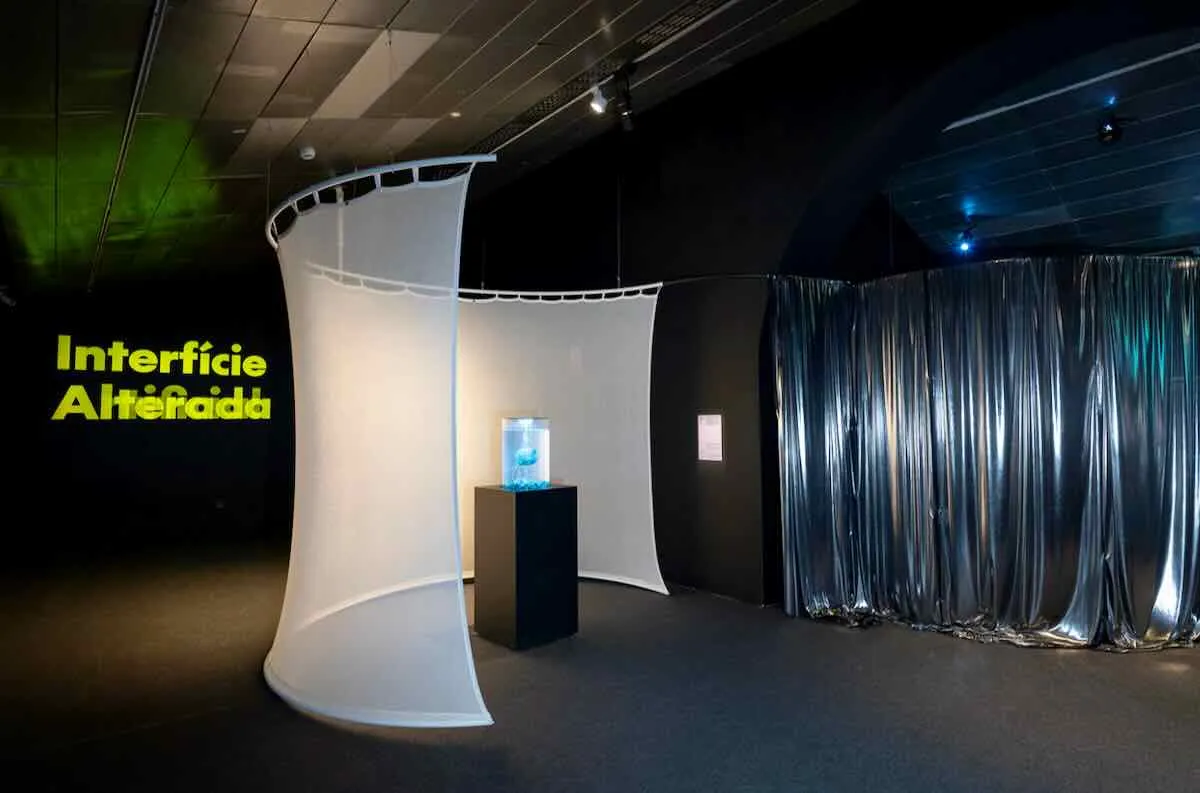
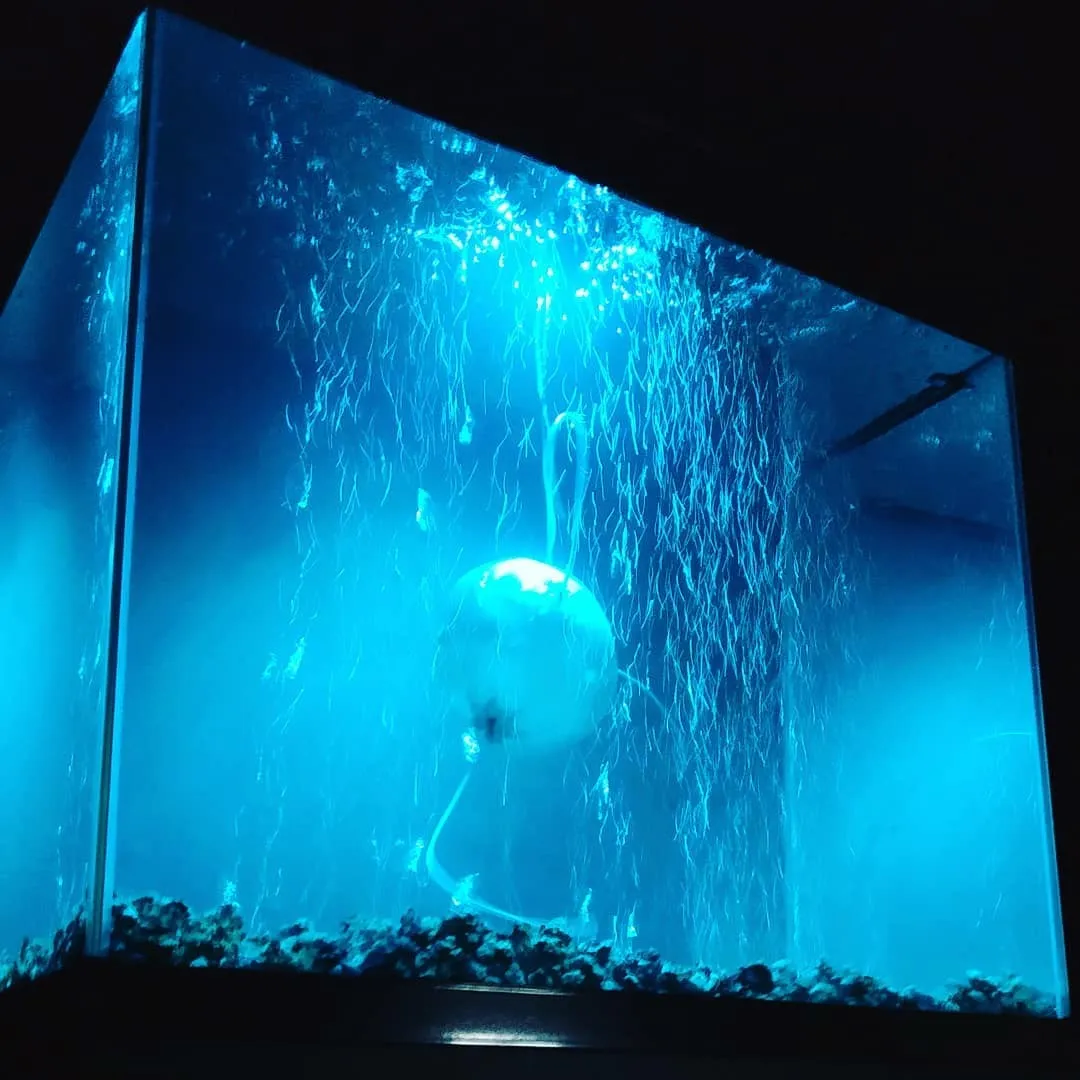
Alex May developed ArchaeaBot with Anna Dumitriu as a collaborative underwater robotic installation that imagines a life-form adapted to survival after climate collapse and technological singularity. First produced through the inaugural EMAP residency at LABoral, the work draws on research into archaea, some of the oldest extremophile microorganisms on Earth, and combines robotics, machine learning, and speculative design to ask what kinds of beings might persist when human systems no longer set the terms of life.
What gives the work force is its refusal to treat future life as clean science fiction. Robotics, biomedia, and speculative design are used to ask what endurance might look like after damage, not before it. That shift brings May’s long-running interest in memory and mediation into contact with extinction, survival, and the possibility that intelligence may persist in unfamiliar forms.
Additional notes
- Developed with Anna Dumitriu during an EMAP residency at LABoral Centro de Arte y Creacion Industrial, Gijon, Spain.
- Created in dialogue with cryomicroscopist Amanda Wilson within the MARA project at Imperial College London.
- The project also involved collaboration with Daniel Polani, Professor of Artificial Intelligence at the University of Hertfordshire.
- Premiered at Ars Electronica Festival in Linz in 2018 and has since been exhibited internationally.
- A version of ArchaeaBot was acquired by ZKM for its collection in 2023.
Selected images