Statues Alive
A night-time projection trail along Chelsea Embankment reanimated public sculpture through video mapping, sound, and interaction.
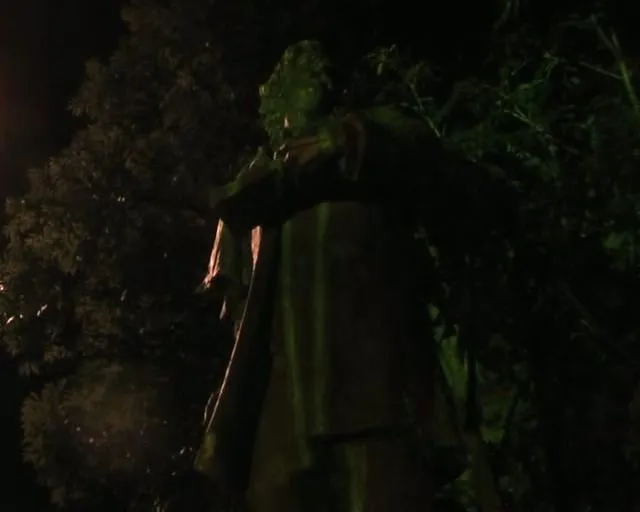
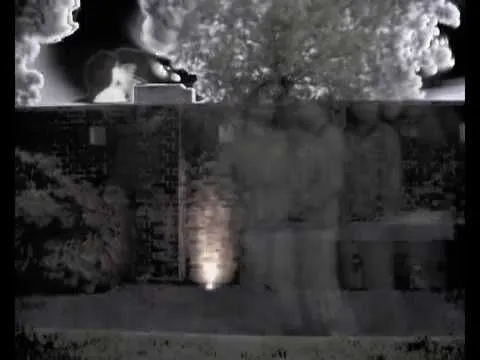
Alex May developed Statues Alive with Martin A. Smith as a night-time projection trail along Chelsea Embankment that reanimated public sculpture through moving image, sound, mirrors, lighting, and interaction. Presented over seven nights in June 2008, the work turned the walk into a sequence of encounters: Whistler, Awakening, Epstein, Boy and Dolphin, and Rossetti were each treated differently, while the interactive screen work Statues Also Die transformed visitors’ shadows into temporary monuments.
The project sits early in May’s wider practice around memory, perception, and technological mediation. Rather than using projection as spectacle, it asked how familiar statues fade into the background and how digital systems can make them visible again, altered but newly present. That tension between public memory and unstable recording carried forward into later works, especially the interactive and algorithmic approaches that grew from Statues Also Die.
Additional notes
- Created by Alex May and Martin A. Smith for Quadratura.
- Commissioned by the Royal Borough of Kensington and Chelsea Arts Service for In Transit 2008, and featured in the London Festival of Architecture.
- Presented from 19 to 25 June 2008 as a night-time walk along Chelsea Embankment, from 9.30pm.
- The realised public trail combined five statue-based interventions with the interactive screen work Statues Also Die.
- Projection mapping was developed with Patchbox, a custom multi-screen tool written by Alex May, with distributed sound played through hidden speakers.
- Video documentation: Statues Alive on Vimeo and Statues Also Die on YouTube.
Selected images