Algorithmic Photography
An ongoing body of algorithmic images and videos that compress several minutes of recorded time into dense, painterly compositions built from thousands of frames.
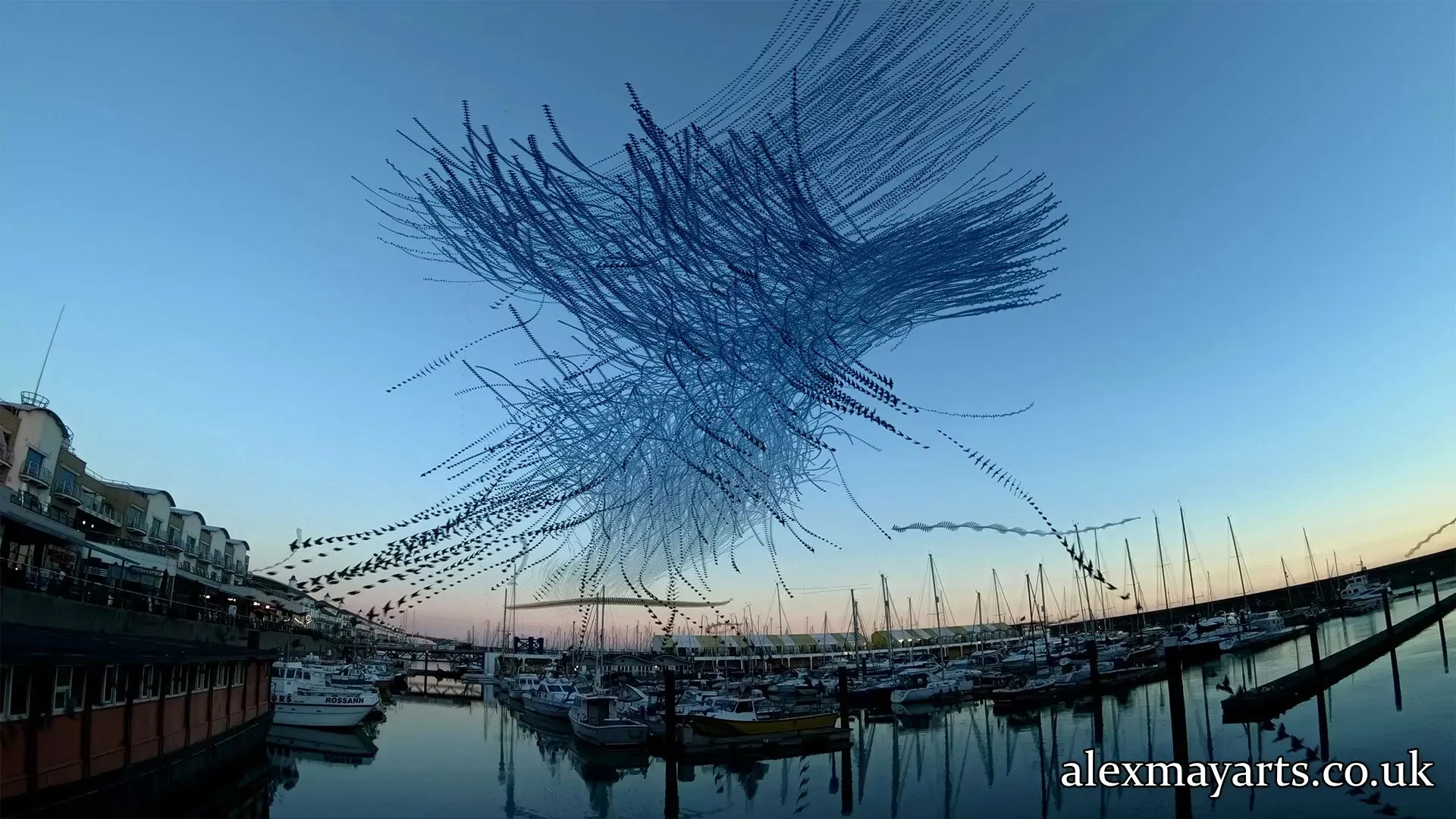
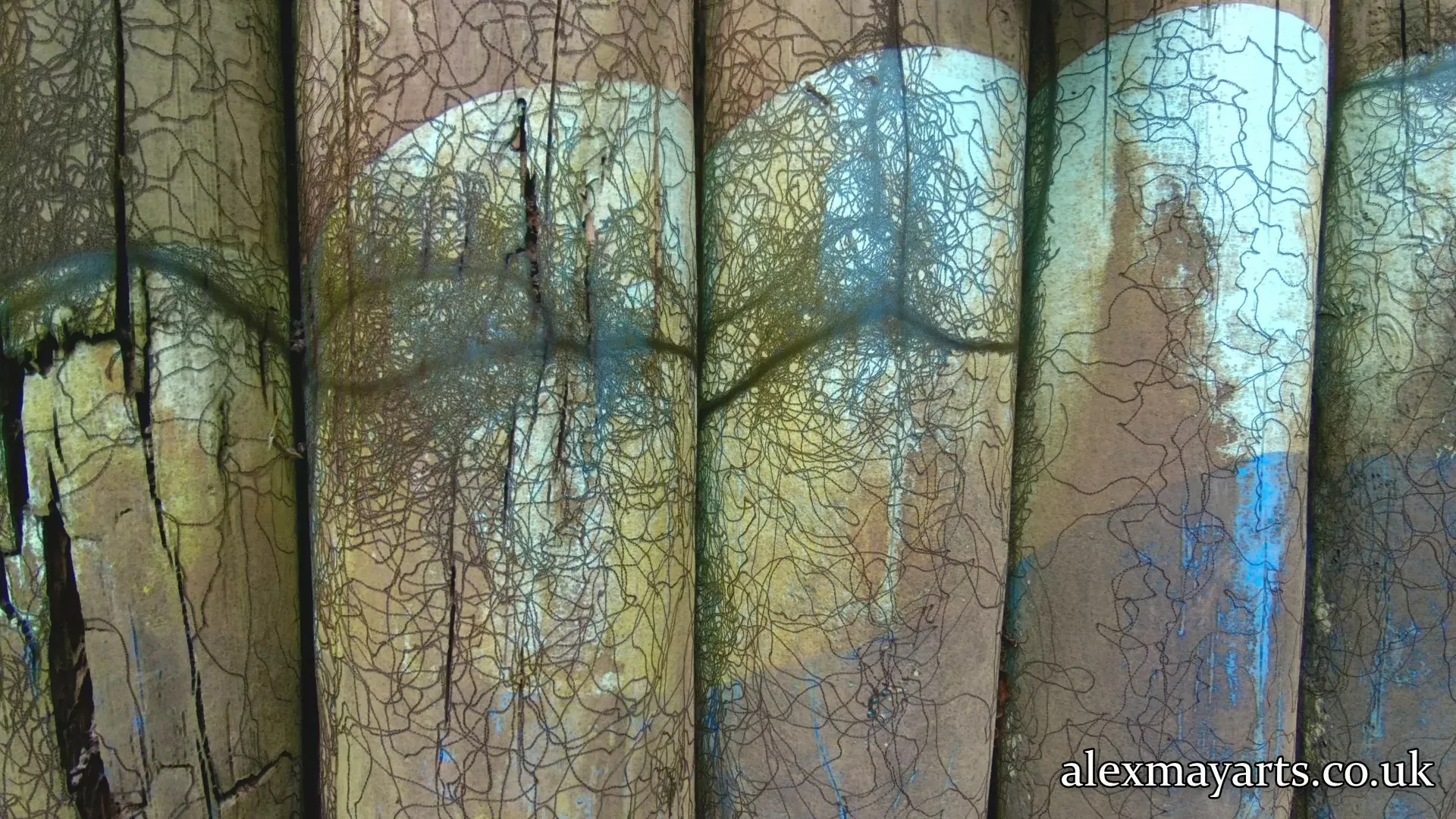
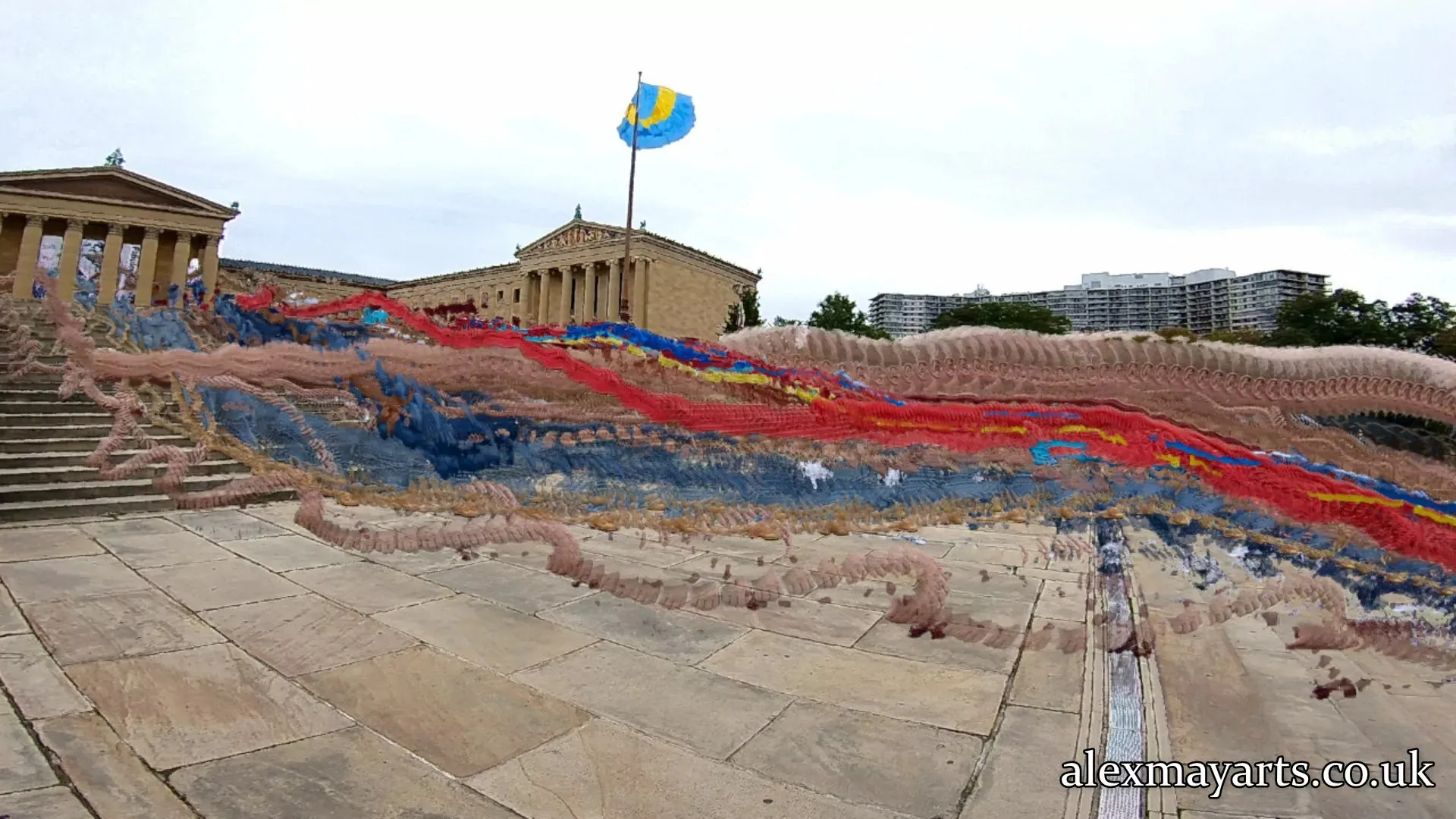
Algorithmic Photography is an ongoing body of photographs and videos made by recording a sequence of time, usually around five minutes, and recombining thousands of frames into a single image. Rather than freezing one instant, the work lets movement accumulate so that birds, insects, weather, vehicles, and people appear as branching paths, dense swarms, or drifting traces. Built with digital cameras and bespoke computer vision software, each image is developed through selective algorithms that choose which pixels persist and which disappear.
The series connects closely to May’s wider interest in how technology reshapes what can be seen, recorded, and remembered. These images do not treat the camera as a neutral witness. They use algorithmic processes to construct a non-human view of everyday events, making duration visible and turning ordinary activity into a layered record of time. In that shift from split-second capture to accumulated trace, the work asks how digital systems alter perception and produce new forms of memory.
Additional notes
- Developed as a distinct series from 2016 onward, building on earlier experiments including Statues Also Die.
- Created with bespoke C++ software using OpenCV and OpenGL-based shader processing.
- Typical works process around 7,500 frames from a five-minute recording at 25 frames per second.
- The series uses different algorithmic approaches including darkest-pixel, brightest-pixel, hybrid, and colour-priority selections.
- Produced as large-format archival prints and moving-image works.
- Works from the series were presented in a 2024 retrospective exhibition and are held in the Computer Arts Society CAS50 Collection.
Selected images