BioComputation Robots
Research into photosensitive brain cells and absence seizures becomes a hands-on encounter with care, timing, and biocomputation in this robotic installation.
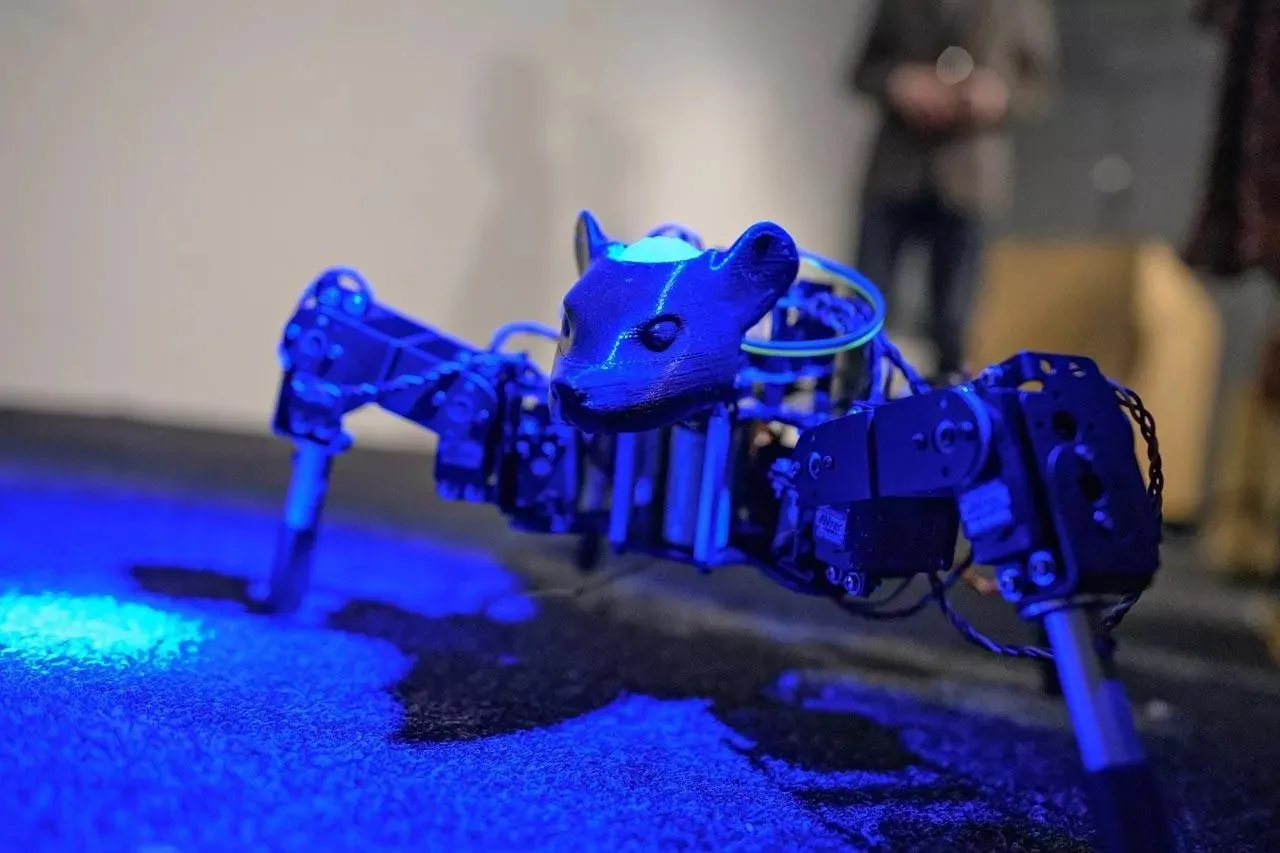
BioComputation Robots is a collaborative robotic installation that translates medical research on epileptic absence seizures into a direct physical encounter. The mouse-like robots invite visitors to watch for signs of collapse and respond by shining blue light at the right moment, turning a computational process into a manual act of care. Rather than illustrating the science from a distance, the work asks people to take part in it, making timing, attention, and intervention central to the experience.
Care in the work is procedural: notice the signal, act in time, and accept that intervention may fail. Robotics are used here not to dramatise autonomy but to make attention and responsibility tangible. That shift from abstract research to embodied response fits closely with May’s wider interest in how technical systems shape perception and social behaviour.
Additional notes
- Created with Anna Dumitriu in collaboration with Professor Volker Steuber at the University of Hertfordshire and Professor Freek Hoebeek at University Medical Centre Utrecht.
- Developed in response to research into using blue light to reset genetically modified photosensitive brain cells linked to absence seizures.
- Designed to engage audiences playfully with neuroscience and future healthcare research.
- The wider series also included the Olfactory Robot, developed in relation to research by Dr Michael Schmuker and Professor Volker Steuber.
- Exhibited at IMPAKT, Utrecht, and later within the Intelligent Machinery exhibition programme.